Deductions from Salary

Salary deductions are amounts withheld from an employee’s gross pay for various reasons, such as taxes, social security contributions, and other mandatory or voluntary deductions agreed upon in the employment contract. Common deductions in salary include:
- Professional Tax (PT)
- Provident Fund (PF)
- Employee State Insurance (ESI)
- Tax Deducted Source (TDS)
- Labour Welfare Fund (LWF)
Professional Tax (PT):
The term “Professional tax” can be misleading, as it is not only levied on professionals. Professional tax is a state level tax on all jobs and businesses, based on income. It is levied on employees and self-employed people, with some states having a minimum income threshold.
Who levies Professional Tax?
State governments have the right to impose and collect professional tax, under Article 276(2) of the Indian Constitution.
Employers deduct professional tax from employee salaries on a monthly basis and pay it to the state government. Self-employed people must pay their own professional tax.
Provident Fund (PF):
The Employees’ Provident Fund (EPF) is a popular savings scheme introduced and administered by the Employees’ Provident Fund Organization (EPFO) under the supervision of the Government of India.
The Employees’ Provident Fund (EPF) is a scheme governed by the Employees’ Provident Funds and Miscellaneous Provisions Act, 1952. The Employees’ Provident Fund Organization (EPFO) is a statutory body under the Ministry of Labour and Employment, Government of India. EPF registration is mandatory for all establishments that employ 20 or more people which provides social security benefits to employees in the form of provident fund, pension, and insurance.
Under the Employees’ Provident Fund (EPF) scheme, employees and employers contribute equally to the fund.
The EPF is a retirement benefit scheme that provides employees with a lump sum payment and interest at retirement.
The EPFO is one of the largest social security organizations in the world, with over 200 million members and over 600,000 establishments covered under its schemes.
As per EPF laws, Once the PF is applicable in any organization, its applicable for all the employees, unless opted out by the employee while joining the organization.
PF is calculated @12% on Basic + DA

Employee State Insurance (ESI):
The Employees’ State Insurance Scheme is a comprehensive social security program established by the Employees’ State Insurance Act, 1948. It provides financial protection to employees against sickness, maternity, disablement, and death due to employment injury. It also provides medical care to insured employees and their families.
This self-funded scheme requires employees and employers to make regular monthly contributions at a certain percentage of their wages.
ESI deduction = 0.75% of Gross Salary

Tax Deducted at Source (TDS):
Tax Deducted at Source (TDS) is a government-implemented system of collecting taxes at the source of income. The payer deducts a certain percentage of tax from the payment made to the receiver, which is then remitted to the government. TDS applies to a wide range of income categories, such as salaries, interest on fixed deposits, rent, and commissions. TDS helps prevent tax evasion and is crucial for both payers and receivers of income in India.
The tax department prescribes the rates at which TDS must be deducted. The company or person making the payment after deducting TDS is called the deductor, and the company or person receiving the payment is called the deductee.
The deductor must deduct TDS before making the payment and deposit it with the government. TDS is deducted regardless of the payment method (cash, cheque, or credit) and is linked to the PAN of the deductor and deductee.
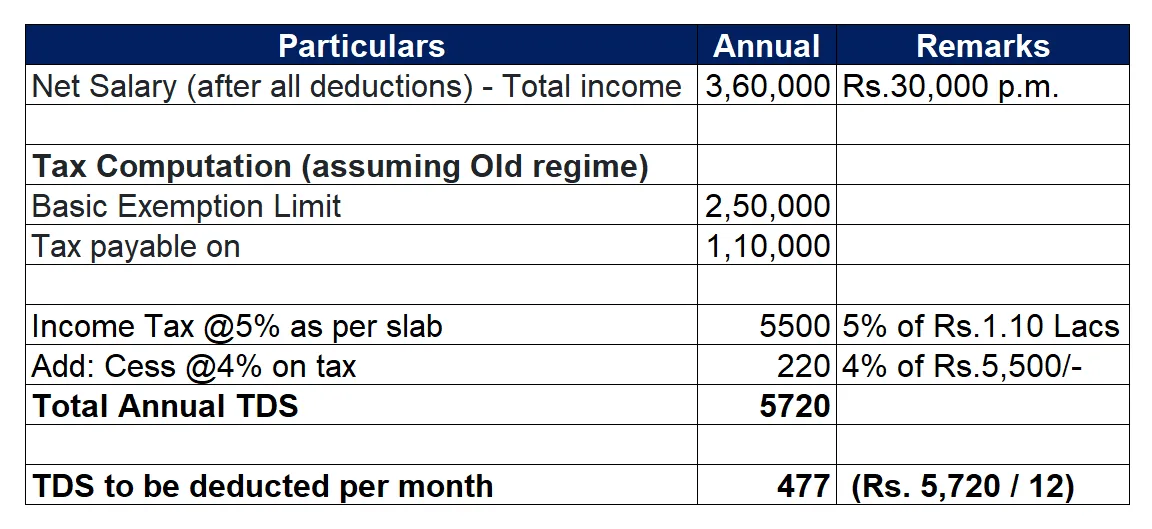
In case of TDS on Salary, the annual income is estimated by the employer and tax is calculated on the same as per the employee tax slab. Thereafter, its deducted on a monthly basis equally from the salary and paid to the Government against employee’s PAN.
Any changes in salary like bonus, increment; any investments or deductions by employee are taken into account and revised TDS is calculated as applicable. Any shortfall or excess TDS can be adjusted in the following months of the same financial year.
Example of TDS to be deducted (Rebate has been ignored in this example):
Summary:
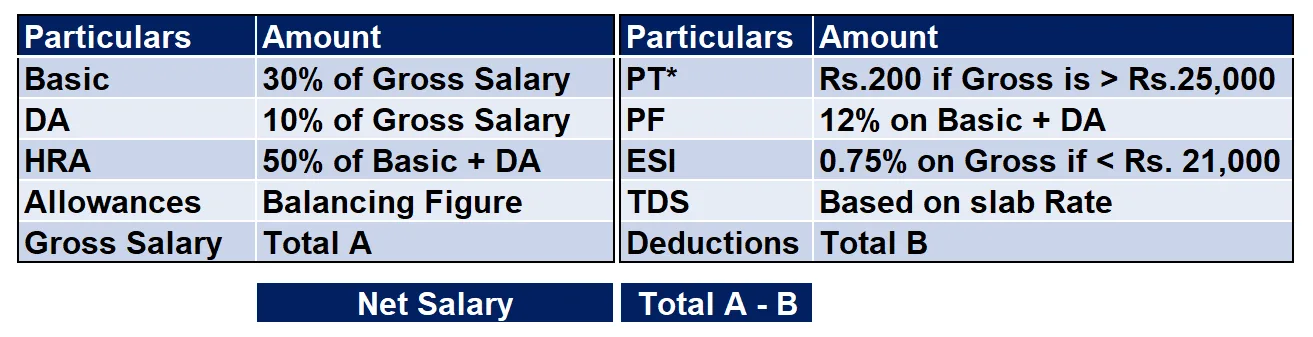
*PT varies from state to state
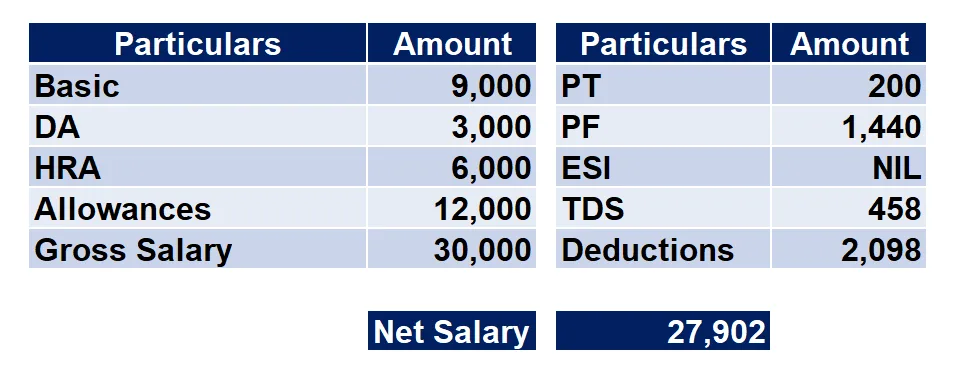
Example Summary:
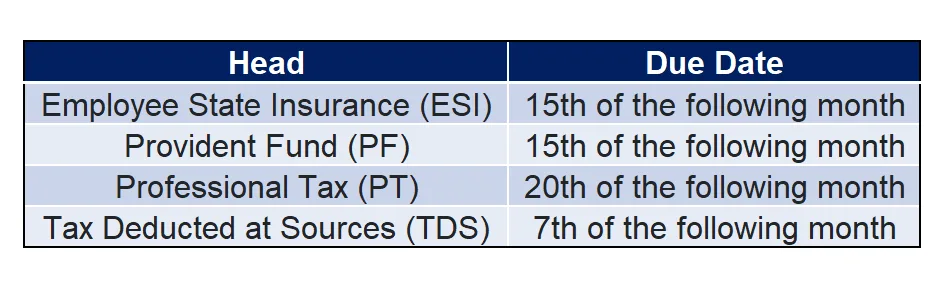
Due Dates for Statutory Deduction Remittances:
The Employer after deducting various statutory dues from employees’ salary has to deposit the same with the Government in employees’ name on or before the due dates as mentioned below:
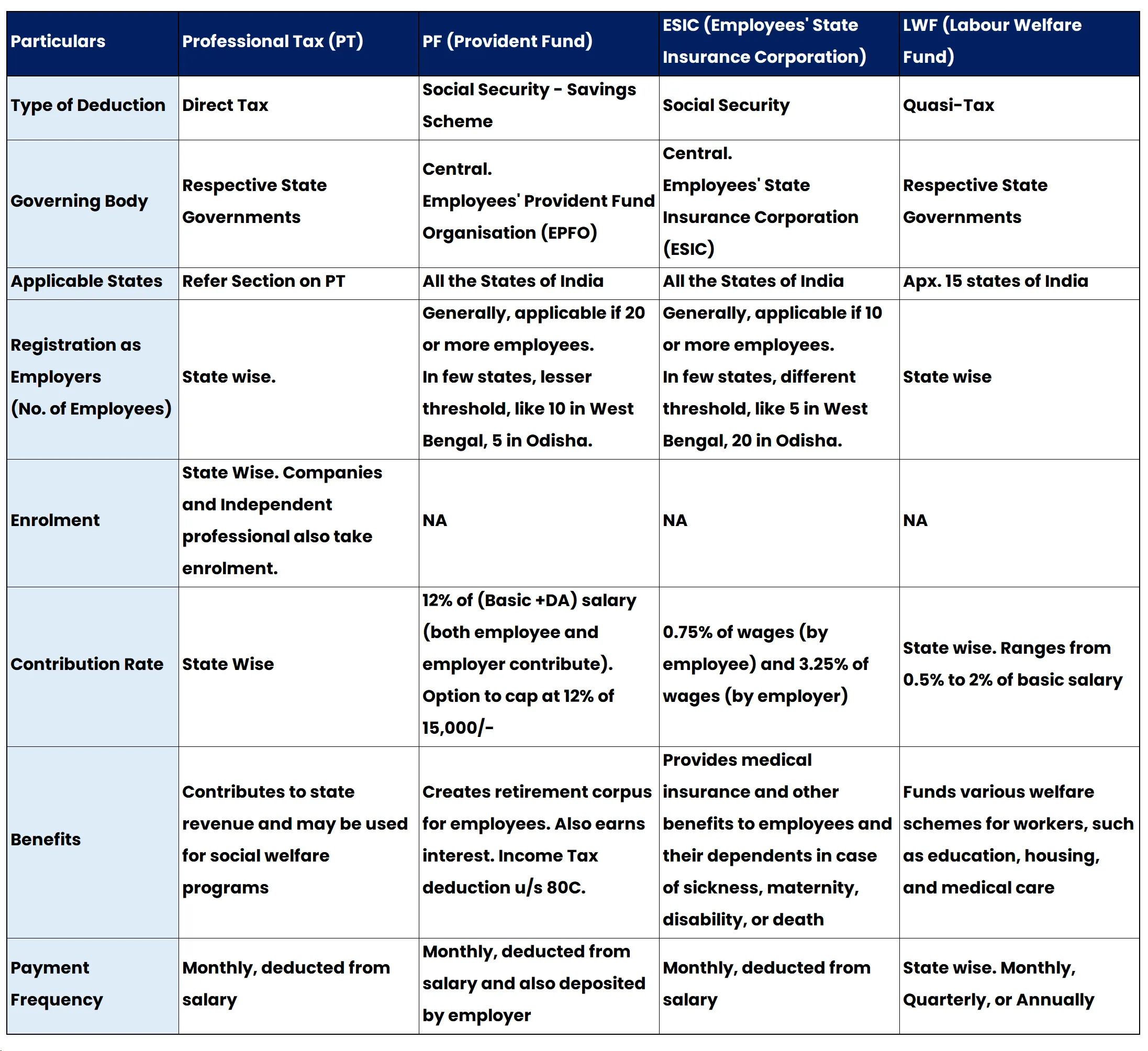
Summary of Statutory deductions:
Please find below a table summarizing various kinds of employee deductions and employer contributions and its comparison: