Case Study 1
1. Budget:
- Using the given data, create a monthly budget for Mr. Raj in an Excel sheet.
- Categorize the income and expenses as shown in the table.
- Calculate the total income, total expenses, and surplus/deficit.
2. Cash Flow statement:
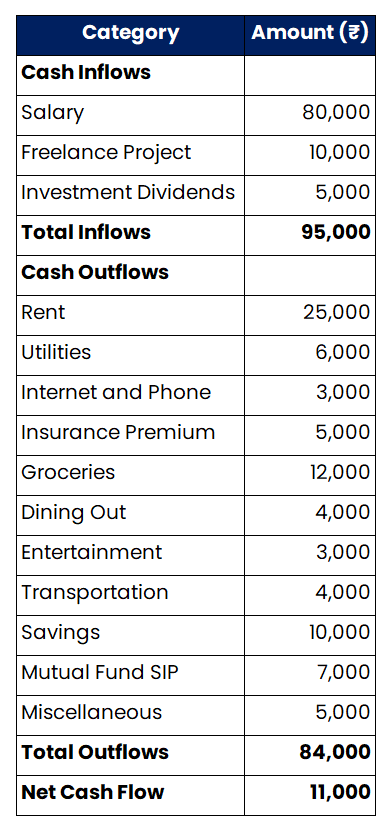
- Using the provided income and expense details, prepare a cash flow statement to track the inflow and outflow of cash for June.
- Ensure the cash flow statement reconciles with the budget.
3. Revise the Budget:
- Assume Mr. Raj expects a slight increase in his freelance income to ₹12,000 and a potential increase in dining out and transportation expenses by 10% due to personal commitments.
- Prepare a revised budget for July incorporating these changes
A salaried individual, Mr. Raj, lives in Mumbai and wants to create a monthly budget to manage his finances better. He has provided the following income and expense details for the month of June.
Income Details for June:

Expense Details for June:

Solution:
1. Creating a Budget for June:
- June Budget:

2. Cash Flow Statement for June
3. Revised Budget for July
Assumptions:
- Freelance income increases to ₹12,000.
- Dining out and transportation expenses increase by 10%.
July Budget:

Analysis:
1. Income:
- The total income has increased due to the higher freelance income.
2. Expenses:
- Fixed expenses remain the same.
- Variable expenses have increased slightly due to higher dining out and transportation costs.
3. Surplus:
- The surplus has increased from ₹11,000 in June to ₹12,200 in July due to higher income despite increased variable expenses.
Conclusion:
Mr. Raj’s financial health is stable with a consistent surplus each month. He can consider allocating the surplus towards further investments or an emergency fund. It’s important for him to monitor variable expenses and ensure they do not increase significantly in the future.