Banking System
Banking refers to the business activity of accepting and safeguarding money owned by other people, then lending out this money to earn a profit. Banks are crucial financial institutions in any economy, facilitating financial transactions, promoting savings, and providing credit. They play a key role in supporting businesses, individuals & governments by offering a wide range of financial services. Banking is a crucial component of the financial system. At its core, banking involves the acceptance of deposits and the provision of loans, but it encompasses much more than that.
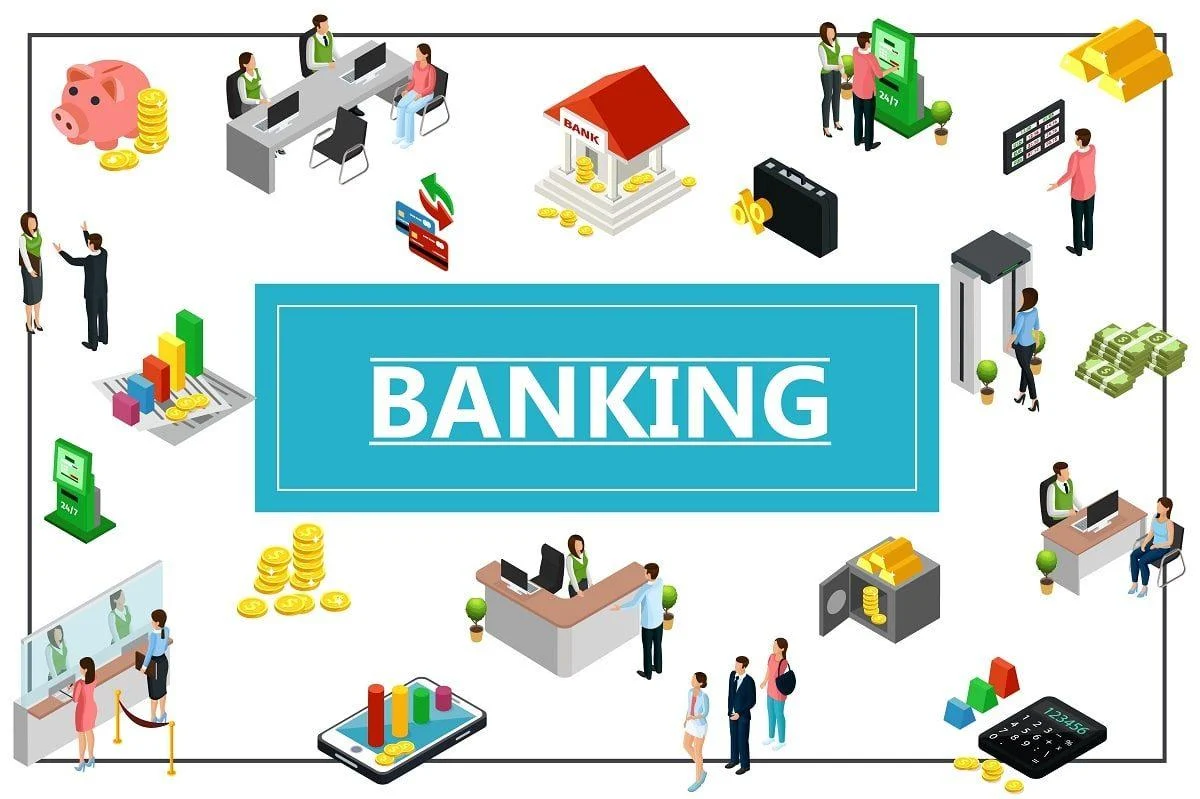
Types of Banks
- Commercial Banks: These are the most common types of banks, dealing with the general public and businesses. They provide services like accepting deposits, offering loans, issuing credit and debit cards, and facilitating payments. Examples include HDFC Bank, ICICI Bank, and Chase Bank.
- Investment Banks: These banks specialize in providing services to large corporations, governments, and high-net-worth individuals. They focus on activities like underwriting, mergers and acquisitions, and issuing securities. Examples include Goldman Sachs and Morgan Stanley.
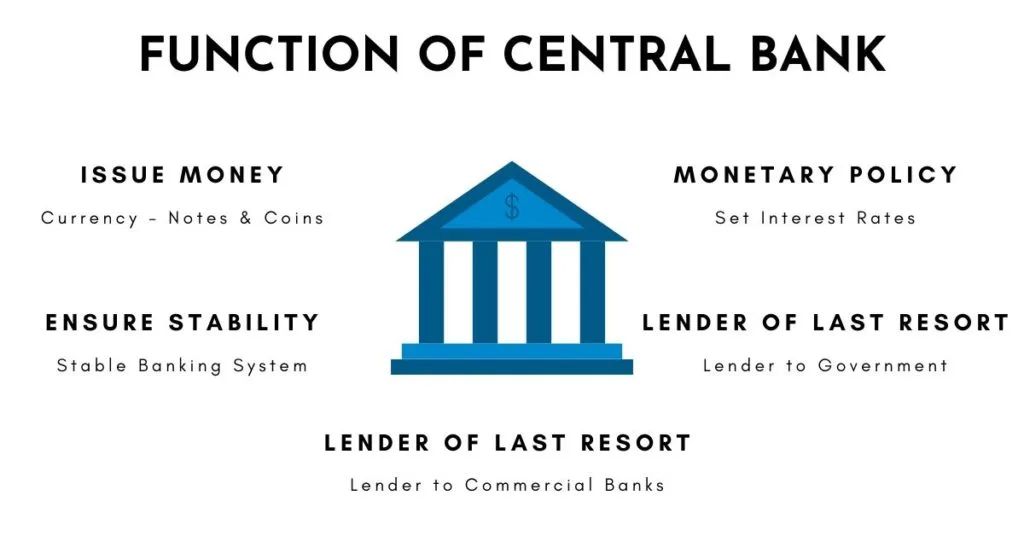
- Central Banks: Central banks oversee and regulate the banking system of a country. They manage the country’s currency, money supply, and interest rates. Central banks also play a crucial role in setting monetary policy. Notable examples include the Federal Reserve (USA) and the Reserve Bank of India (RBI).
What are the functions of Bank?
- Accepting Deposits: Banks provide various accounts for individuals and businesses to deposit money, such as savings accounts, checking accounts, and fixed deposits.
- Providing Loans and Credit: Banks lend money to individuals and businesses to meet their financial needs, whether it’s for buying a home, expanding a business, or funding education.
- Facilitating Payments and Transfers: Banks offer services that allow customers to make payments, such as electronic transfers, credit card transactions, and checks.
- Security Services: Banks may also offer safe deposit boxes and other security services to protect customers’ valuables.
- Foreign Exchange Services: Many banks offer currency exchange services for international transactions and travel.
Role of Central Bank
A central bank is a financial institution that has the responsibility of managing a nation’s currency, money supply, and interest rates. It plays a critical role in the economy by implementing monetary policy, regulating and supervising the banking sector, issuing currency, and serving as the lender of last resort to ensure the stability of the financial system.
In India, the central bank is the Reserve Bank of India (RBI). Established in 1935, the RBI is responsible for managing India’s monetary policy, regulating the banking sector, and ensuring the stability of the country’s financial system. It plays a pivotal role in guiding India’s economic growth and maintaining price stability.
Current Trends in Banking
- Fintech and Digital Transformation: Financial technology (fintech) has revolutionized the banking industry, with innovations like mobile payment apps, digital wallets, and peer-to-peer lending platforms.
- Cryptocurrencies and Blockchain: Cryptocurrencies like Bitcoin and blockchain technology are influencing the banking sector, leading to new financial products and services.
- Environmental, Social, and Governance (ESG) in Banking: Banks are increasingly focusing on sustainability and social responsibility, integrating ESG principles into their operations.
- A Unified Payments Interface (UPI) is a smartphone application that allows users to transfer money between bank accounts. It is a single-window mobile payment system developed by the National Payments Corporation of India (NPCI). It eliminates the need to enter bank details or other sensitive information each time a customer initiates a transaction.
Recently, even other countries adopted UPI and are accepting UPI payments like Singapore, Malaysia, UAE, France, Nepal, UK, Mauritius, Sri Lanka, to name a few