MIS Analytical Tools:
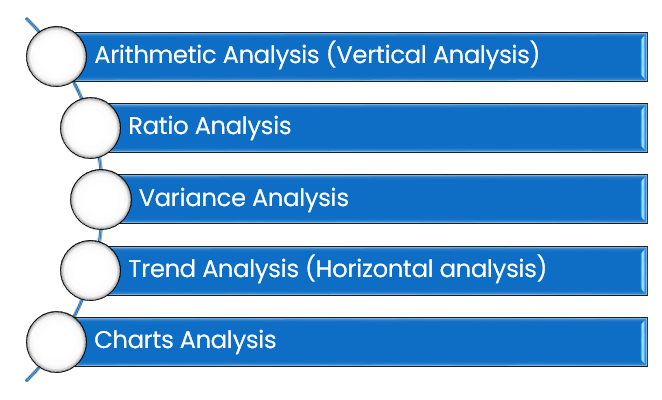
Arithmetic Analysis (Vertical Analysis):
These are the terms used in a typical profit and loss account. Starting from Revenue and deducting various expenses we arrive at GP, EBIDTA, PBT, PAT and EPS.

COGS = Cost of Goods Sold
Gross Profit (GP) Analysis:

The objective of business is to maximize the profit margin: It can be done by either increasing the revenue or reducing the costs. Theoretically, it is possible to achieve higher sales either by raising the prices or increasing the volume of units sold, or both.
In practice, increase in the price is only possible to the degree that they do not loose the competitive edge. Further, sales volumes remain dependent on market conditions, such as the total market demand, the percentage of the market share, and the current position of the competitors. Similarly, there are also limited scope for cost controls.
Earnings Before Interest, Tax, Depreciation and Amortization (EBIDTA) Analysis:

EBIDTA is the profits that a company has earned before deduction of any interest on loan or borrowings; depreciation and tax. It can be calculated by simply subtracting the operating expenses from the total revenue of the company.
EBITDA reflects the profitability of the company without considering the expenses in relation to borrowings (interest); capital assets (depreciation); and direct taxes (Income tax).
Profit Before Tax (PBT) Analysis:

- Also known as Earnings Before Tax (EBT), Profit Before Tax (PBT) is the measure of the company’s profit before the payment of corporate income tax.
- Company owners can also compare the operations of different companies regardless of the existing tax laws in different geographies.
- Profit before tax also acknowledges the debt obligations of a company.
Profit After Tax Analysis:

Profit After Tax refers to the amount that remains after the company has paid off all of its operating and non-operating expenses, other liabilities and taxes. This profit is what is distributed by the entity to its shareholders as dividends or is kept as retained earnings in reserves.
- Profit After Tax is often an effective figure used to calculate ratios which measure the profitability and efficacy of the company
- The Profit After Tax margin also impacts the stock prices if the company is publicly listed.
- If the company is listed, Profit After Tax is calculated on a per share basis too, which is called as Earnings per Share (EPS) and it appears on the income statement of the company.
- If the PAT value is high, it shows high efficacy and vice versa.
- PAT is directly proportional to the dividends paid to equity shareholders; more the profits, better dividends can be paid.