Portfolio Planning: A Comprehensive Guide
Portfolio planning is a critical aspect of personal finance that involves creating and managing a collection of investments to achieve specific financial goals. Understanding the principles of portfolio planning can help students and new investors make informed decisions, manage risks, and maximize returns over time.
What is Portfolio Planning?
Portfolio planning is the process of selecting a mix of investment assets tailored to an individual’s financial objectives, risk tolerance, and time horizon. The goal is to optimize the balance between risk and return according to the investor’s needs
Key Concepts in Portfolio Planning
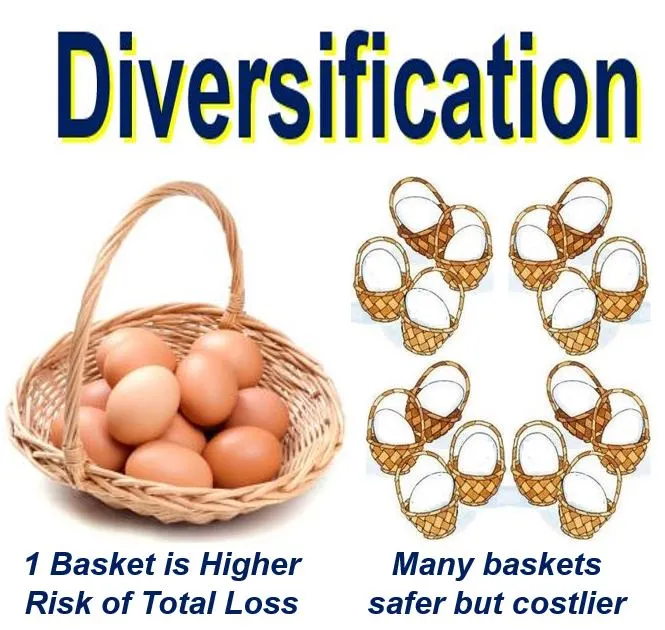
1. Diversification-
- Definition: The practice of spreading investments across various asset classes (stocks, bonds, real estate, etc.) to reduce risk.
- Benefit: Diversification helps mitigate the impact of poor performance of any single investment.
2. Asset Allocation:
- Definition: The process of deciding how to distribute investments among different asset classes.
- Factors: Factors include risk tolerance, investment goals, and time horizon.
- Example: A common asset allocation might be 60% stocks, 30% bonds, and 10% cash.
3. Risk Tolerance:
- Definition: An investor’s ability and willingness to endure market fluctuations and potential losses.
- Assessment: Determined by factors such as age, financial situation, and investment goals.
- Categories: Conservative, moderate, and aggressive.
4. Time Horizon:
- Definition: The length of time an investor expects to hold an investment before taking money out.
- Impact: Longer time horizons generally allow for more risk-taking since there is more time to recover from market downturns.
5. Investment Goals:
- Definition: Specific financial objectives an investor aims to achieve (e.g., retirement, buying a house, education fund).
- SMART Goals: Goals should be Specific, Measurable, Achievable, Relevant, and Time-bound.
Steps in Portfolio Planning
1. Assess Your Current Financial Situation:
Calculate your net worth and understand your income, expenses, debts, and existing investments.
2. Define Your Financial Goals:
Set clear, achievable goals with a timeline for each (e.g., saving for college in 10 years, retirement in 30 years).
3. Determine Your Risk Tolerance:
Assess how much risk you are willing to take based on your personality, financial situation, and investment goals.
4. Choose an Asset Allocation:
Based on your risk tolerance and time horizon, decide how to distribute your investments among various asset classes.
5. Select Your Investments:
Choose specific investments within each asset class (e.g., selecting individual stocks, bonds, mutual funds, or ETFs).
6. Monitor and Rebalance Your Portfolio:
- Regularly review your portfolio to ensure it remains aligned with your goals and risk tolerance.
- Rebalance by buying and selling assets to maintain your desired asset allocation.
Portfolio planning is essential for managing investments effectively and achieving financial goals. By understanding the principles of diversification, asset allocation, risk tolerance, and time horizon, students can build and manage a portfolio tailored to their needs. Regular monitoring and rebalancing ensure the portfolio stays aligned with their objectives, providing a structured path towards financial security and growth.
Portfolio Planning: Let us understand how to plan a portfolio by taking an example
Let’s say Anjali is a 25-year-old professional looking to invest for retirement in 40 years. Her goal is to retire at age 65 with Rs 10 Crore. She has a moderate risk tolerance and wants a balanced portfolio with growth potential. Plan her portfolio.
Retirement Planning for Anjali
Anjali’s young age and long investment horizon (40 years) allow for a balanced portfolio with a tilt towards growth. Here’s how we can approach her investment plan:
1. Goal Setting:
- Target Corpus: Rs. 10 Crore at retirement (age 65).
- Investment Time Horizon: 40 years (65 – 25).
2. Risk Tolerance:
- Moderate Risk Tolerance: Anjali is comfortable with some risk for the potential of higher returns.
3. Asset Allocation:
Given her age and goals, here’s a possible asset allocation:
3A. quity / Mutual Funds (70%): This will be the primary driver of growth. Here’s a breakdown:
- 40% – Large-Cap Equity Funds: Invest in well-established companies with a proven track record for stability and long-term growth.
- 20% – Mid-Cap Equity Funds: Invest in companies with good growth potential, offering a balance between risk and reward.
- 10% – Small-Cap Equity Funds (Optional): Consider a small allocation for potentially explosive growth, but be aware of the higher risk.
3B. Debt (20%): This portion will provide stability and some income:
- 15% – Debt Mutual Funds: Invest in a mix of corporate bonds and government bonds to offer stability and manage interest rate risk.
- 5% – Fixed Deposits (FDs): Invest in FDs with varying maturity periods (e.g., 1, 3, 5 years) to spread the liquidity and get some guaranteed returns.
3C. Cash Equivalents (10%) (Optional): This can be included for short-term goals or emergencies. Consider a high-yield savings account.
or
3D. Instead deposit in Gold ETF’s / SGB Scheme
What is Gold ETF
A Gold ETF (Exchange Traded Fund) is an investment product that tracks the price of gold. It essentially allows you to invest in gold without having to physically buy and store the metal itself.
What is SGB Scheme
Sovereign Gold Bond (SGB) is a government securities denominated in grams of gold. It is a substitute for holding physical gold.
4. Investment Strategy:
- Systematic Investment Plan (SIP): Invest a fixed amount regularly (monthly/quarterly) through SIPs in chosen mutual funds. This inculcates discipline and averages the cost of investment over time.
- Increase Investment Over Time: As Anjali’s income grows, consider increasing her SIP contributions to accelerate wealth accumulation.
5. Rebalancing:
- Periodically review your portfolio performance (e.g., annually) and rebalance as needed to maintain the target asset allocation. This ensures your risk profile remains aligned with your goals.
6. Additional Considerations:
- Employer-sponsored retirement plans: If Anjali’s employer offers a retirement plan with a company match, prioritize maximizing her contribution to benefit from free money.
- Tax-advantaged accounts: Explore options like Equity Linked Savings Schemes (ELSS) for tax benefits on investments.
By starting early, following a disciplined investment strategy, Anjali can increase her chances of achieving a comfortable retirement with a Rs. 10 Crore corpus.