Gross Salary

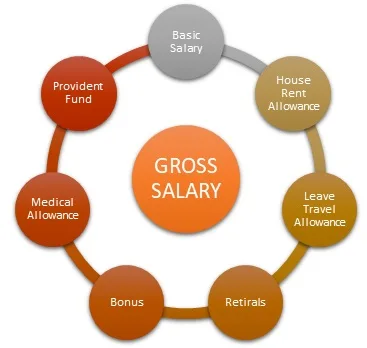
Gross salary is the total amount of money an employee earns from their employer in a year before any deductions or taxes are applied. It includes base salary, bonuses, overtime pay, holiday pay, and other allowances, but excludes deductions such as income tax, provident fund, profession tax, and medical insurance, if any.
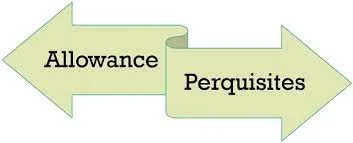
Generally, Salary can be broken in 3 types: Basic, Allowances and Perquisites.
- Basic: Core and Cash Component
- Allowances: Monthly fixed amount to cover various kinds of expenses for the employees e.g. HRA, LTA, Conveyance, Travelling Allowance etc.
- Perquisites: Non-cash benefits provided to the employees like Rent-Free Accommodation, Free Car, Gardener at house, Driver etc.
Components of Gross Salary
Following are the major components of Gross Salary;
- Basic Salary
- Dearness Allowance (DA)
- House Rent Allowance (HRA)
- Leave Travel Allowance
- Conveyance Allowance
- Special Allowance
1. Basic Salary:
- Basic salary is the core component of your salary, and provident fund is calculated on basic salary plus dearness allowance (DA).
- Basic salary can be in the range of 30%-50% of the gross salary. However, this differs from company to company.
Example:
- Monthly Gross Salary = Rs.30,000/-
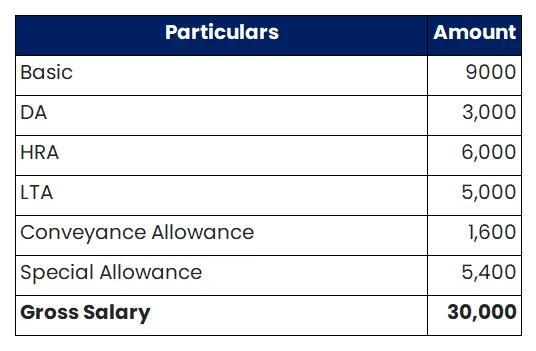
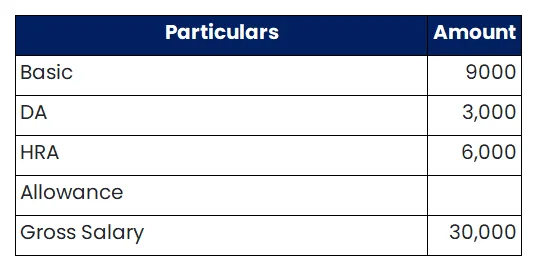
- Basic = 30,000*30% = Rs.9,000
2. Dearness Allowance (DA):
- Dearness allowance (DA) is a payment made to employees to offset the impact of inflation. Inflation is the rise in the prices of goods and services over time, which can erode the purchasing power of an employee’s salary. The amount of DA paid varies depending on the employee’s location.
- DA (dearness allowance) is generally 10% of the gross salary.
Example:
- Gross Salary = Rs.30,000/-
- Basic = 30,000*30% = Rs.9,000
- DA = 30,000*10% = Rs.3,000
- Basic + DA= 30,000*40% =Rs. 12,000
3. HRA (House Rent Allowance):
- House rent allowance (HRA) is a salary component that helps employees cover their housing costs. It also offers tax benefits up to a certain limit.
- As per Indian Income Tax law, for calculating the tax benefit, the limits allowed are either 40% or 50% of Basic Salary. Hence, most of the companies, keep HRA component accordingly based on employee’s location.
- In metro cities (Delhi, Mumbai, Kolkata, and Chennai): HRA is 50% of Basic + DA.
- In non-metro cities: HRA is 40% of Basic + DA.
Example:
- Gross Rs.30,000/-
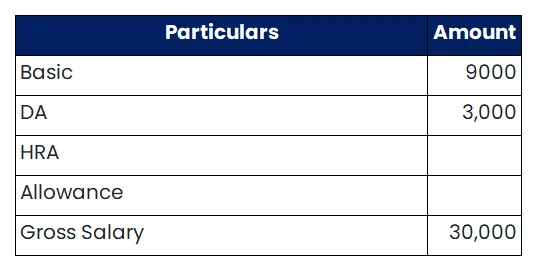
- HRA= 50% of Basic+ DA =12,000*50% = Rs. 6,000/- (Assuming metro city)
4. Leave Travel Allowance (LTA):
Leave travel allowance (LTA) is an allowance offered by employers to cover employees’ travel expenses during vacation. To claim LTA, employees must submit original bills to their company. The LTA amount varies depending on the employer policy and the employee’s designation.
Example:
- LTA is fixed at 60,000 per annum i.e Rs.5,000 p.m.
5. Conveyance Allowance:
Commuting to work can be expensive, especially during natural disasters or bad weather. Many companies offer a conveyance allowance to help employees with their travel costs. Employees can claim reimbursement for a portion of their expenses, up to the amount of the allowance. Companies typically only offer this allowance if they do not provide transportation to their employees.
Example:
Conveyance allowances can be fixed amount of Rs.1,600 per month
6. Special Allowance:
A special allowance is a fixed amount of money paid to the employees in addition to their basic salary to cover specific daily expenses.
Balancing figure = Gross salary – Basic – DA – HRA
Allowances can also be expressed as:
Special Allowances = Gross salary – Basic – DA – HRA – LTA – Conveyance-Other allowance
Example:
- Continuing the above example, Gross salary Rs.30,000/-
- Special Allowance = Gross Sal – Basic – DA – HRA = 30,000 – 9,000 – 3,000 – 6,000-5,000-1,600 = Rs.5,400/-